
Smarter Media Monitoring Starts with Smarter Search
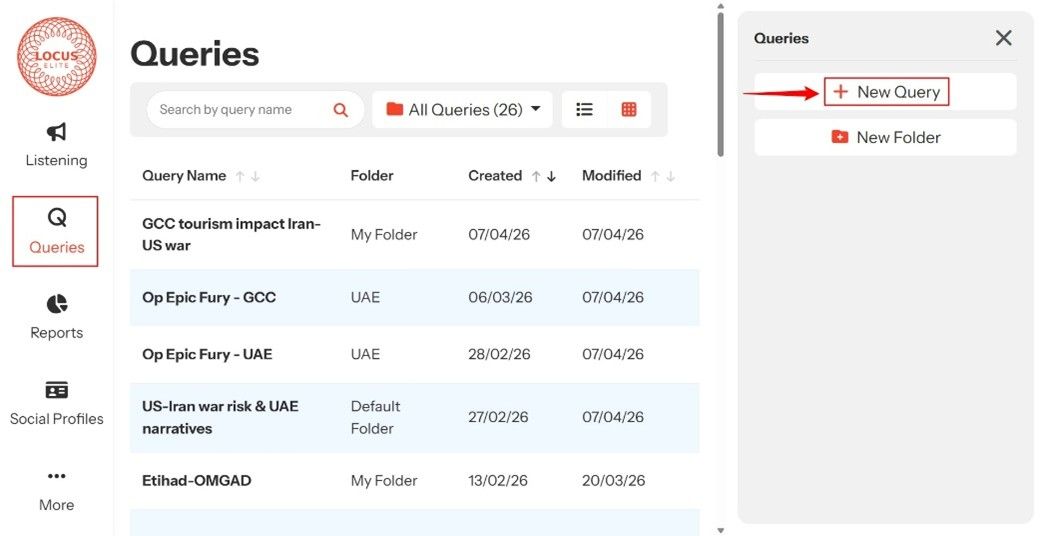
Media monitoring begins with one simple step: asking the platform what you want to track. Whether you are monitoring brands, topics, industries, or public sentiment, the ability to define your search accurately determines the quality of your insights.
Traditionally, building monitoring queries required writing complex Boolean search syntax — combining multiple keywords using AND, OR, NOT, proximity operators, and filters. While powerful, this approach often required expertise and time.
With the latest update in Locus Elite, we’ve made query creation easier than ever — while still giving power users the precision they need.
Now, from beginners to expert analysts, everyone can create powerful monitoring queries in the way that suits them best.
Three Powerful Ways to Create Your Search :
1. AI Search – Just Describe What You Want
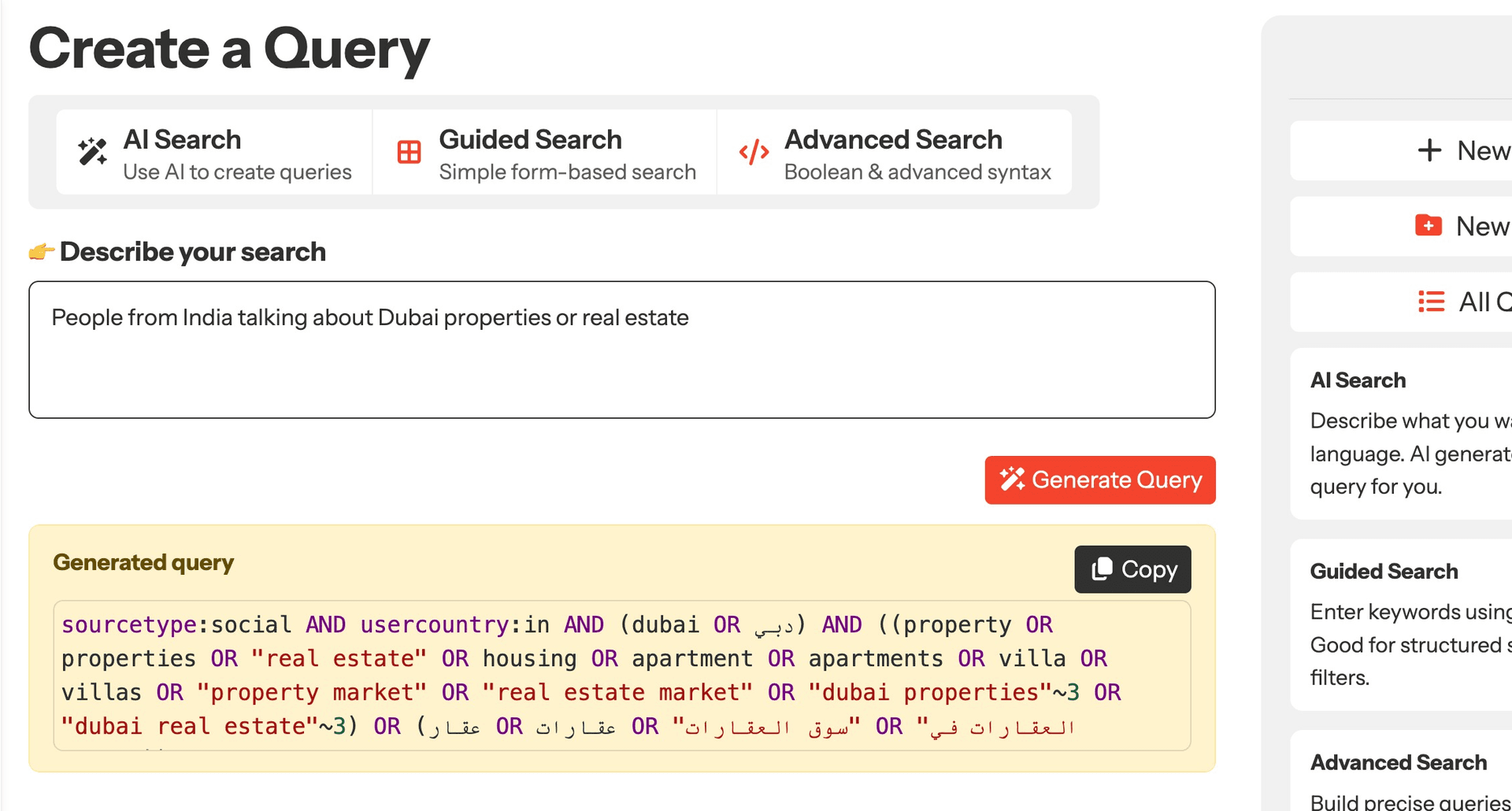
The easiest way to start monitoring.
Simply describe what you want to track in plain language, and the system will instantly generate a powerful monitoring query for you.
For example, you could type:
“People from India talking about Dubai real estate.”
The system automatically converts your request into a complex multilingual Boolean query, including relevant keywords, synonyms, and filters.
This means:
- No need to learn Boolean syntax
- No need to manually list every keyword
- Instant conversion into advanced monitoring queries
- Faster setup for new users
- AI Search transforms natural language into analyst-grade queries in seconds.
2. Guided Search – Structured and Simple
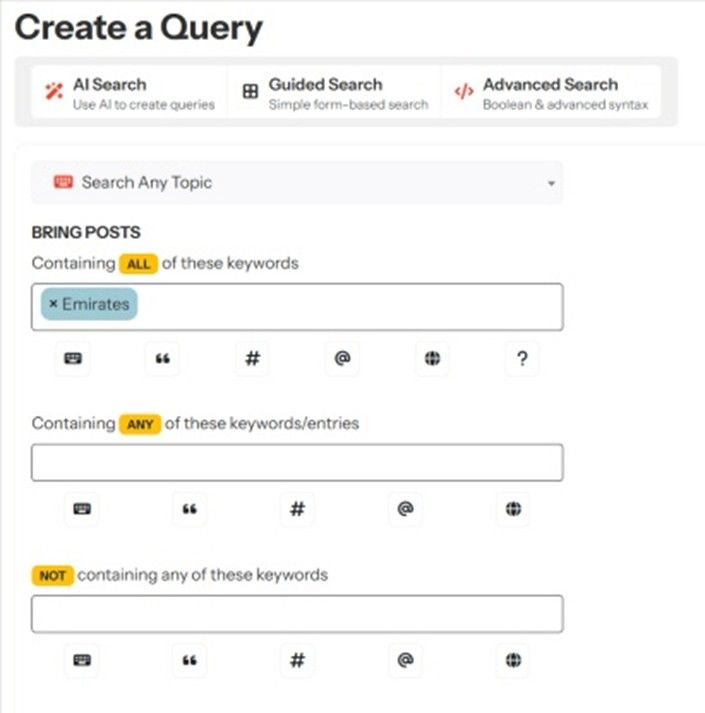
For users who prefer a more structured approach, Guided Search provides a simple form-based interface.
You can easily define:
- Keywords that must appear
- Keywords where any may appear
- Keywords that should be excluded
- Mentions, hashtags, phrases, or domains
- This method is ideal when you want a clear and guided workflow,
- without writing complex search syntax yourself.
Guided Search balances simplicity and control, making it perfect for structured monitoring setups.
3. Advanced Search – Full Boolean Power
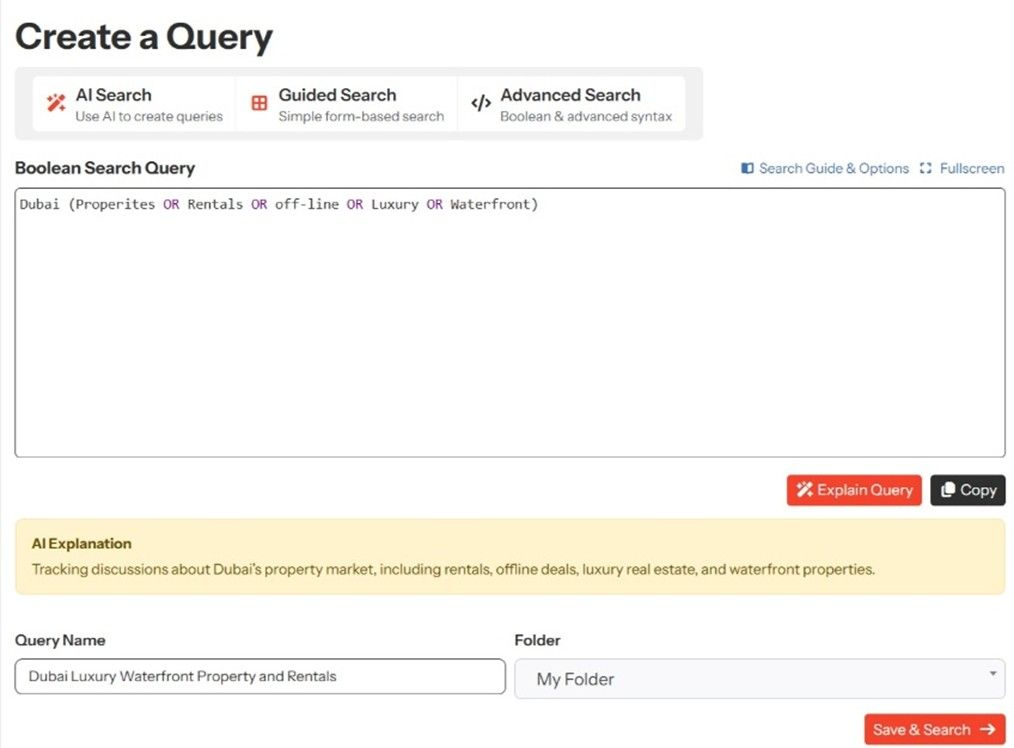
For experienced analysts who want maximum control, the Advanced Search mode provides full Boolean query capabilities.
You can write precise monitoring queries using:
- Boolean operators (AND / OR / NOT)
- Phrase matching
- Proximity operators
- Filters such as language, location, or source
- Custom logical structures for complex monitoring scenarios
This mode is designed for users who want to craft highly targeted and sophisticated monitoring queries.
AI Can Also Explain Your Queries
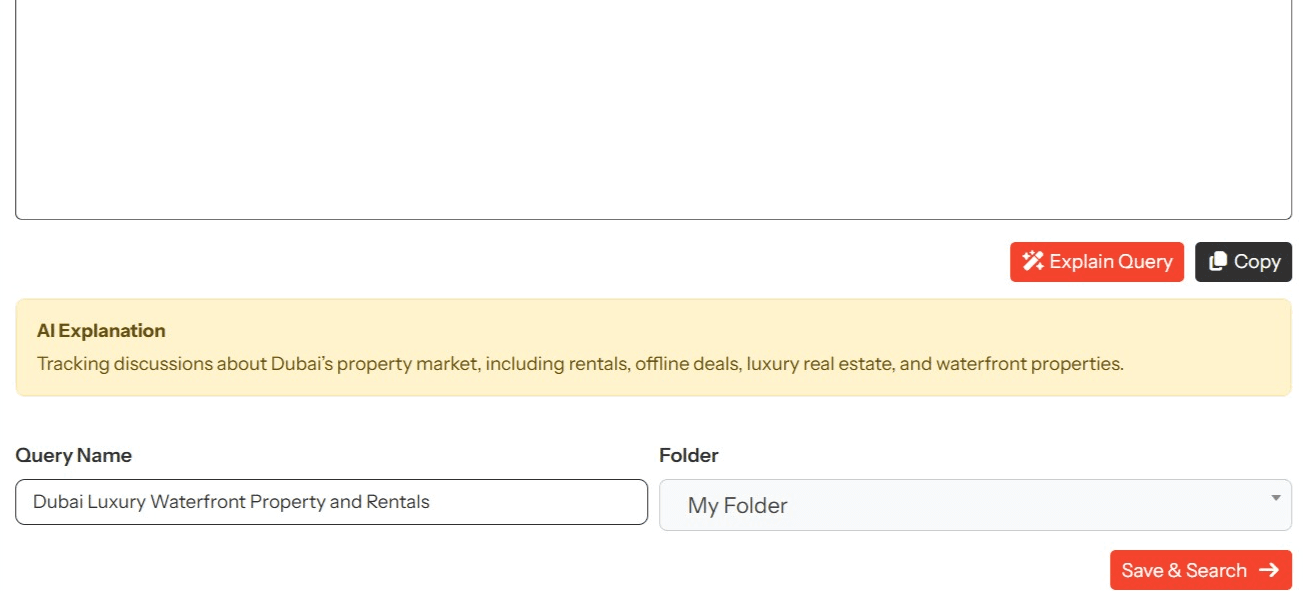
Even when using complex Boolean queries, the platform provides an additional layer of assistance.
With a single click, the system can read your Boolean query and explain it in plain English.
This allows you to:
- Verify that your query behaves exactly as intended
- Quickly understand queries written by others
- Avoid mistakes in complex monitoring setups
- It’s like having an AI assistant reviewing your monitoring logic.
Built for Every Type of User
With these three approaches, Locus Elite now supports every level of user experience:
- Beginners can simply describe what they want to monitor
- Structured users can use guided forms
- Experts can write powerful Boolean queries
- And the best part? All three approaches are interchangeable.
You can start with natural language, refine it with Guided Search, and finalize it in Advanced Mode if needed.
Coming Next: Voice-Based Query Creation
We are continuing to innovate.
Soon, instead of typing your monitoring request, you’ll be able to simply speak it. Using voice input, the system will convert your spoken request directly into a monitoring query.
Just say what you want to track — and the platform will do the rest.
Try It Now
Creating powerful monitoring queries has never been easier.
Open Locus Elite → Queries → Create a Query and try:
- AI Search
- Guided Search
- Advanced Search
Find the approach that works best for you and start monitoring the conversations that matter.