
Why Social Profiles Matter More Than Just Posts
The Social Profiles feature in the Locus Elite app is designed to give a deep, intelligence-led view of any public social media account, moving far beyond simple post tracking. Instead of only showing what an account has published, Social Profiles helps you understand how that account performs, who engages with it, and why it matters—making it especially valuable for communication teams, analysts, and agencies evaluating influence, credibility, and partnership potential.
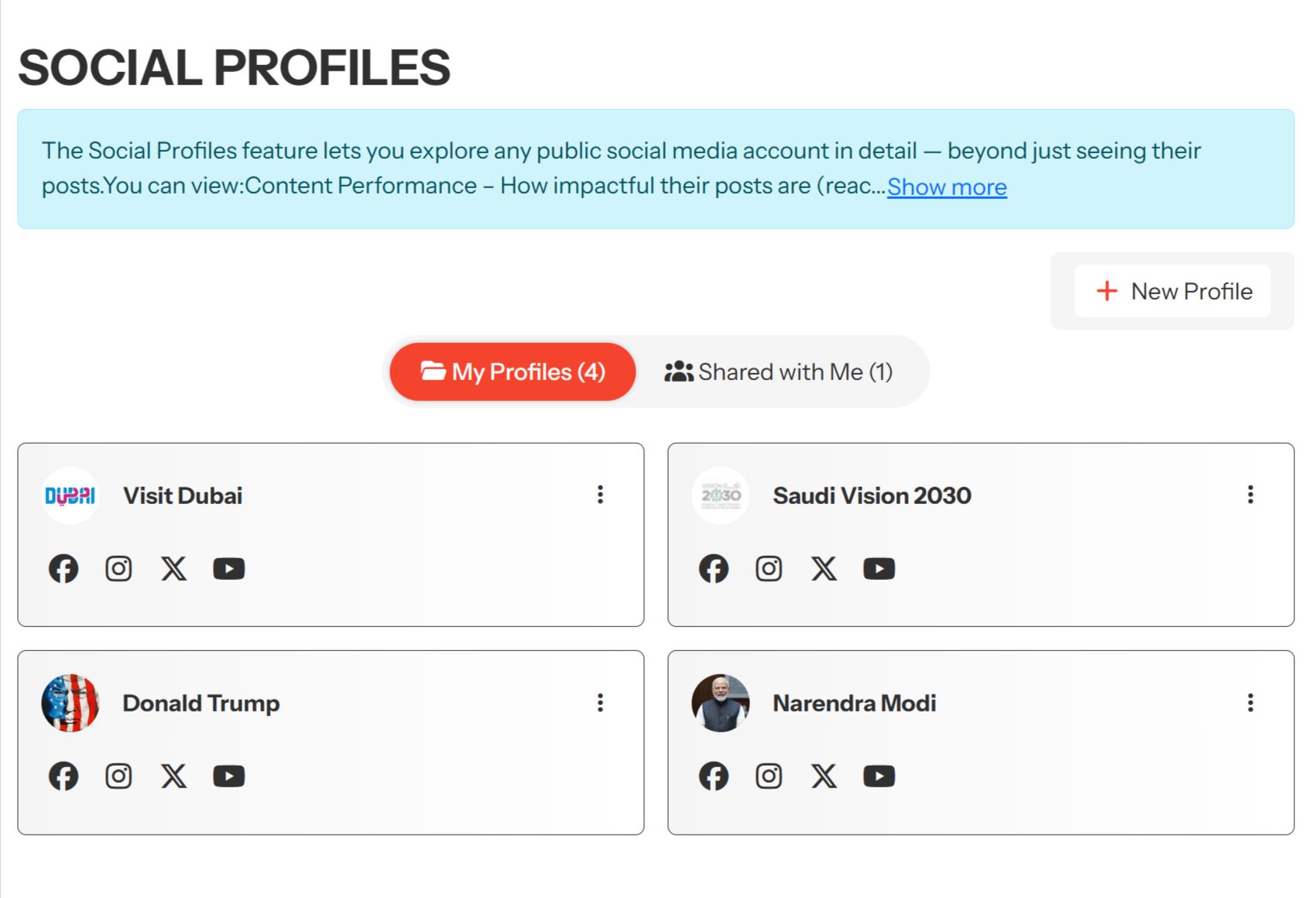
It is built for continuous monitoring of individuals, organisations, institutions, and creators across multiple social platforms, ensuring a holistic and up-to-date view of their digital presence.
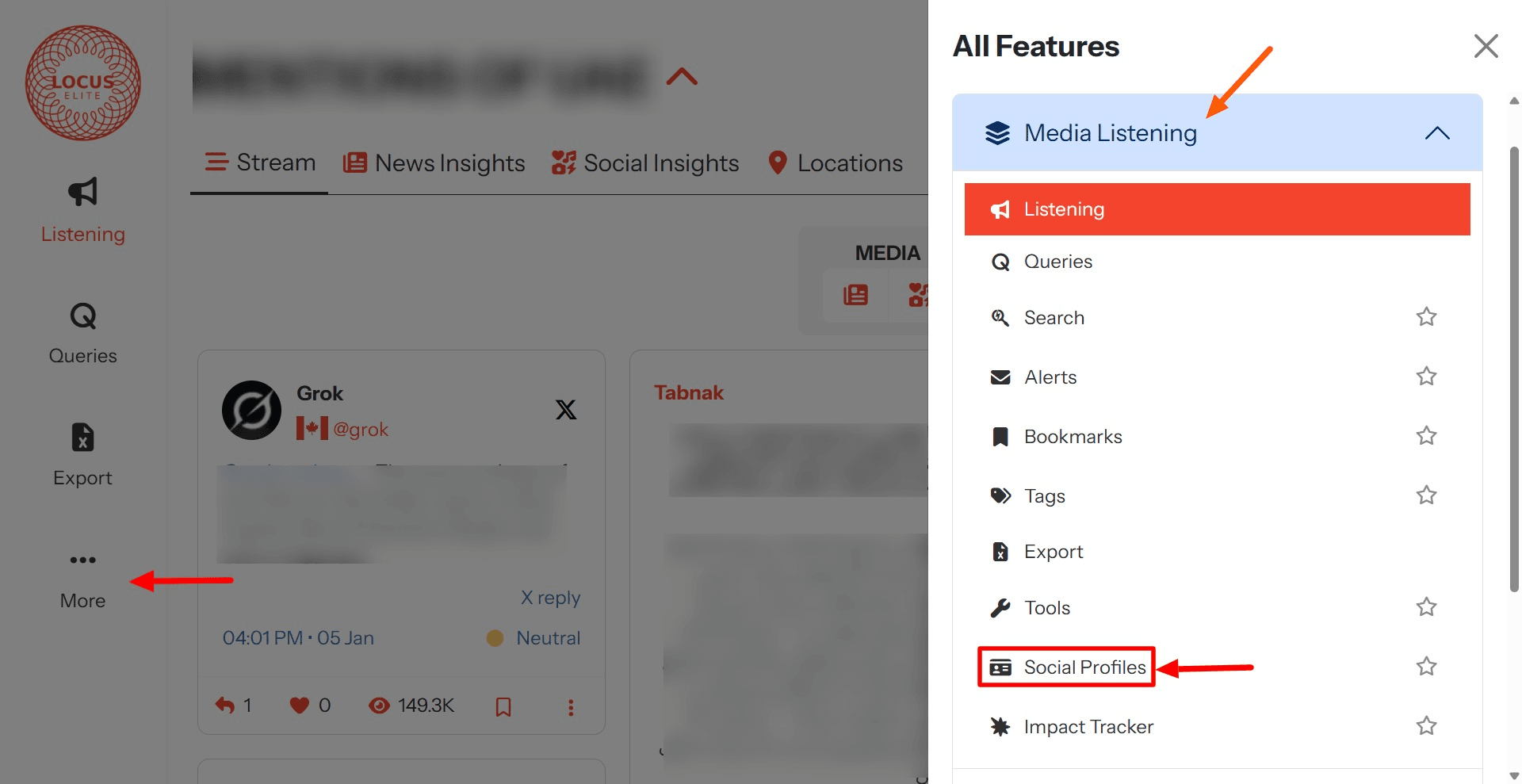
Within Social Profile Feature, the View Posts section functions as a clean, verified feed of content published directly by the profile owner. It shows posts exactly as they were posted, without noise from spam, bots, or unrelated mentions.
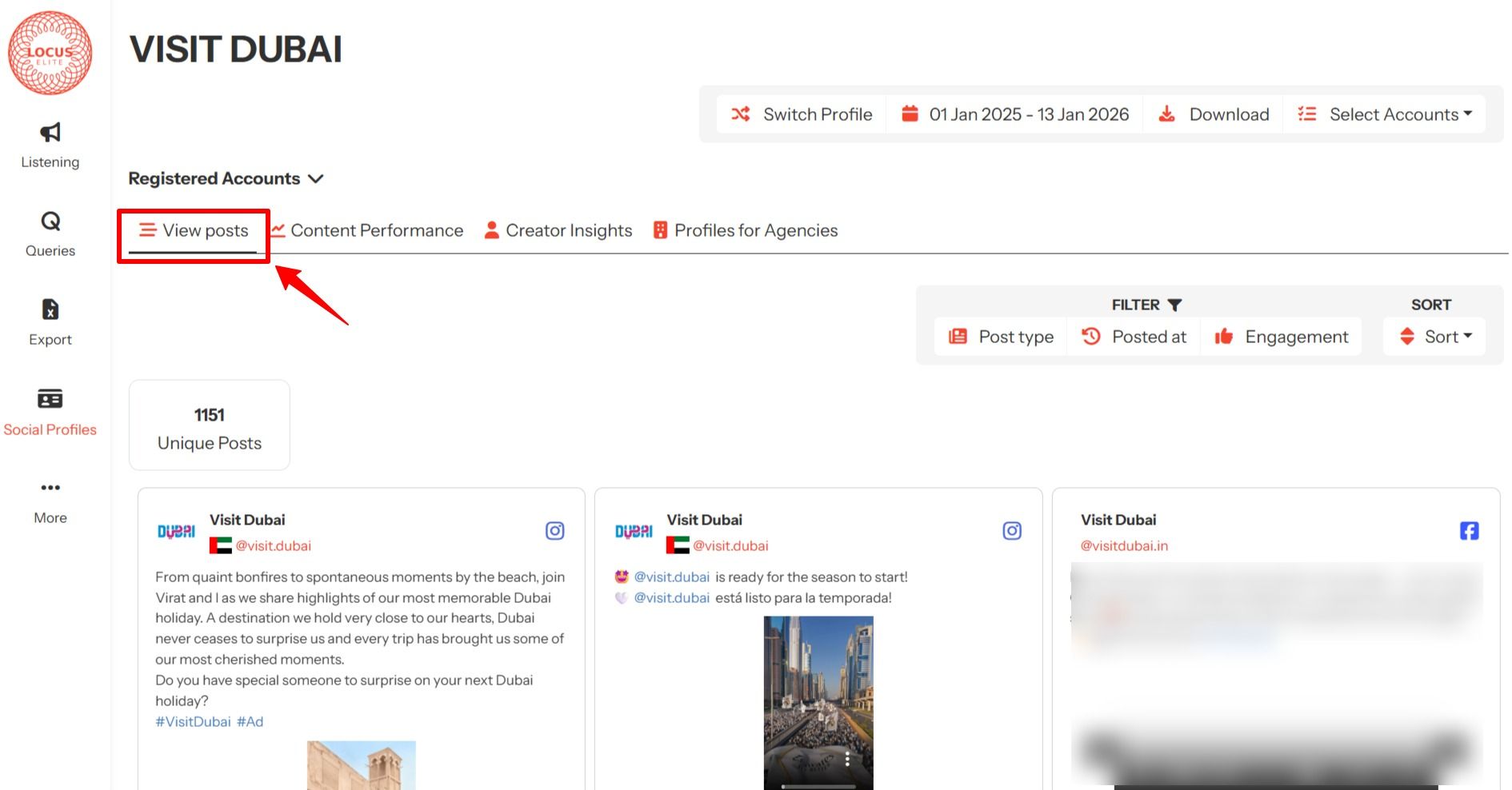
View Posts section is ideal when you want to understand messaging themes, tone, timing, and narrative intent from a specific account. It focuses strictly on authored content, allowing teams to read updates in context while maintaining confidence that the data reflects authentic activity from the account itself.
The Content Performance section translates raw data into meaningful KPIs and visual insights, helping users assess how impactful an account’s content truly is. It breaks down performance through metrics such as total posts collected (including reposts, with spam and bot activity removed), unique posts that represent original content, total likes, comments, impressions, and overall engagement across all posts.
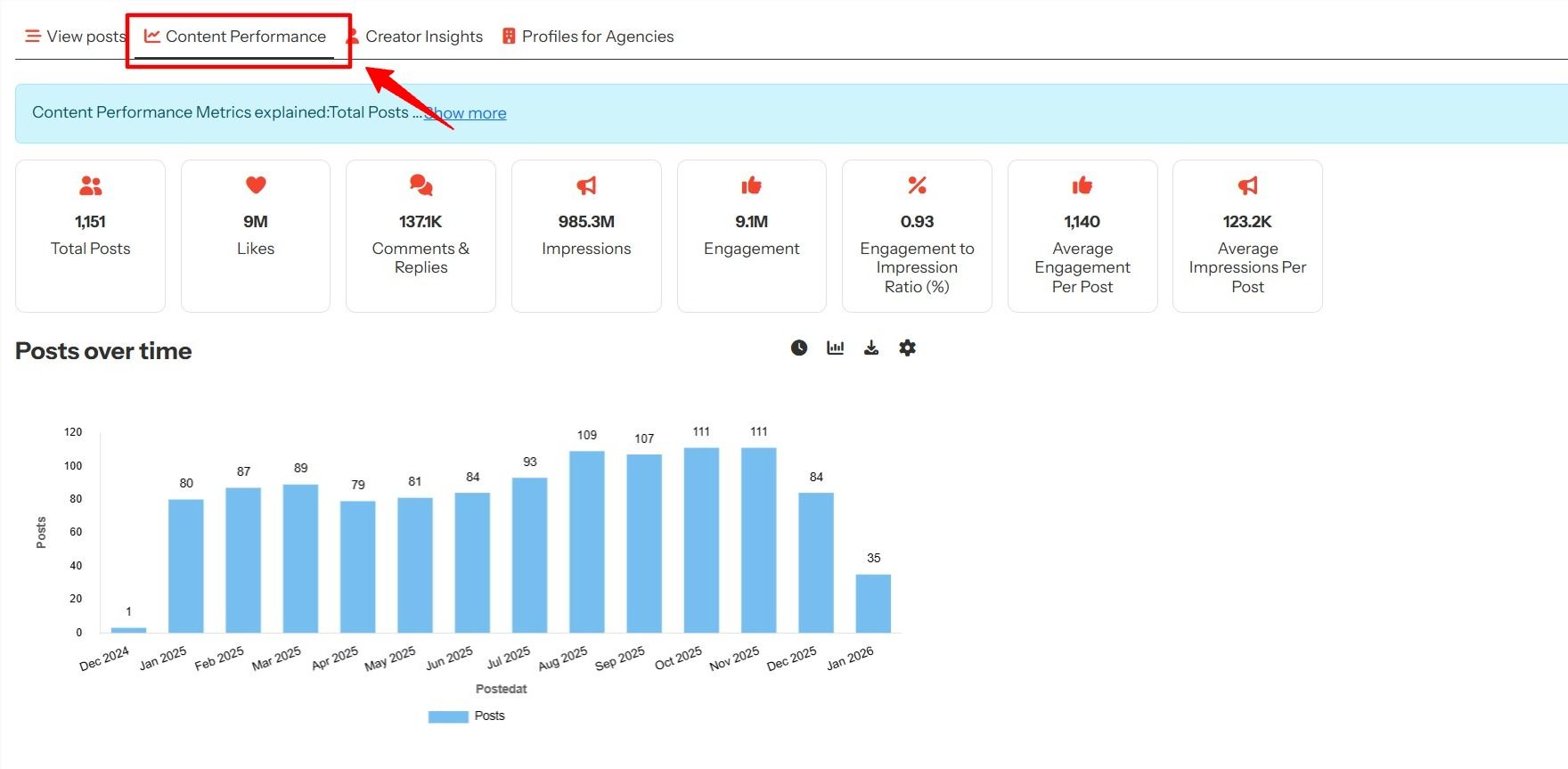
More importantly, it highlights quality indicators like the engagement-to-impression ratio, which shows how often audiences interact after seeing content—revealing resonance rather than just reach. A high number of views with low engagement signals weak connection, while stronger ratios indicate relevance and interest.
Average engagement per post and average impressions per post further contextualise consistency, making it easier to identify whether performance is driven by a few viral moments or sustained audience response. Top-performing posts are surfaced to show what formats, messages, or topics generate the strongest outcomes.
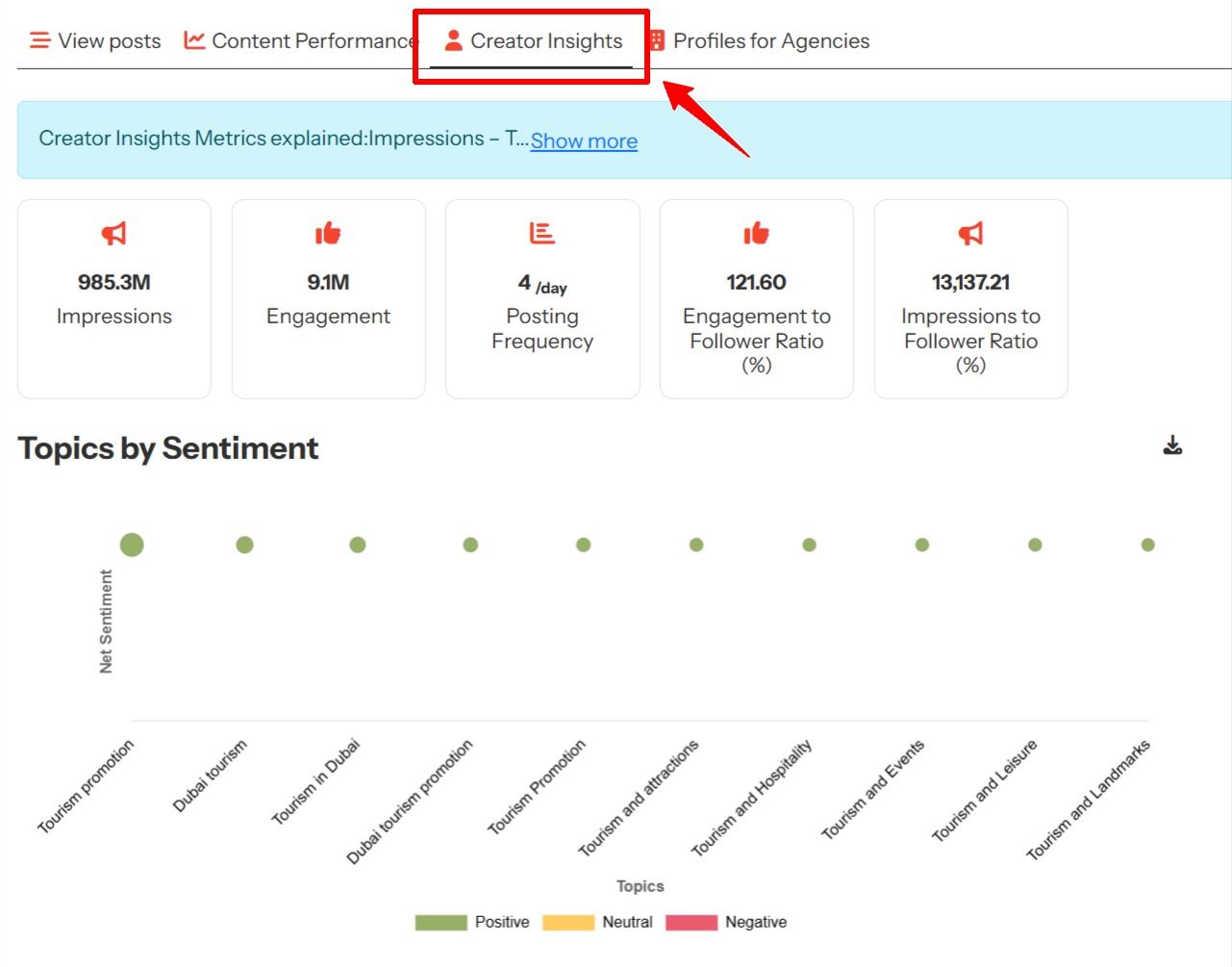
The Creator Insights section shifts the focus from content to influence, offering a deeper understanding of how an account behaves and how its audience responds over time. It captures total impressions and engagement across posts, alongside posting frequency to reveal how often the account publishes and how that cadence affects visibility. Advanced ratios such as engagement-to-follower and impressions-to-follower provide critical signals about audience loyalty and organic reach.
These metrics show whether engagement is strong relative to follower size and whether content is breaking beyond an existing base to reach new audiences. High ratios often indicate strong community trust and algorithmic favour, while lower ratios may suggest limited resonance or stagnant growth. These insights are especially useful when assessing creators or institutions with large followings, where raw numbers alone can be misleading.

For professional and consulting teams, the Profiles for Agencies view adds a strategic evaluation layer by presenting monthly performance trends and sentiment analysis tied to the profile. This allows agencies to track how an account’s visibility, engagement, and public perception evolve over time, helping determine whether it is worth engaging, partnering, or benchmarking against that individual or organisation. Sentiment signals further reveal whether attention is driven by positive advocacy, neutral information sharing, or negative discourse—critical context for reputation management and campaign planning.
Overall, Social Profiles is built for scenarios that require continuous, multi-platform monitoring and analysis of a specific account’s digital footprint. It is the right tool when the goal is to evaluate influence, performance, audience dynamics, and strategic relevance.